
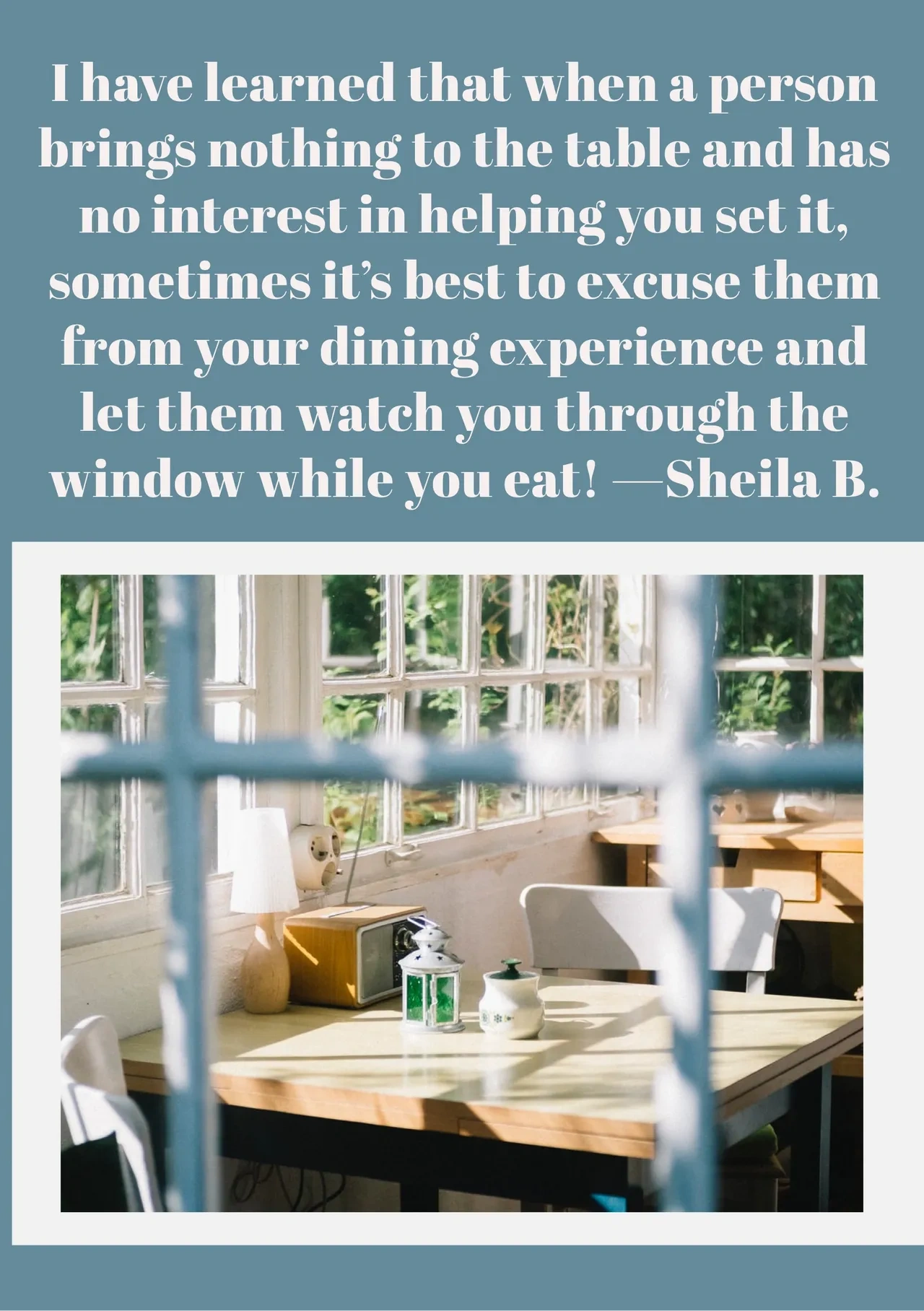
I’ve learned that if someone brings nothing to the table and shows no interest in helping you set it, it’s often best to excuse them from your dining experience. Let them watch from the window as you enjoy the meal you’ve worked to prepare.
Who Should Sit at Your Table?
In real life, our relationships are a lot like going out to eat. We build our lives on our goals, dreams, and beliefs, which are shown by the table. People who sit at our table are the ones we let into our lives to share our happiness and pain.
But what happens when someone doesn’t bring anything? If they don’t want to help you set it, what should you do? Sometimes, the best thing to do is to remove them from the meal and let them watch you succeed from the window.
This idea isn’t about being angry or hurt; it’s about being aware of your worth and keeping your peace. Let’s talk about how we can use this metaphor to look at our relationships, set limits, and make a happy life with caring people around us.
Setting the Table: Knowing Your Worth
You are the first person who sets the table. It’s about knowing what you’re worth and what you bring to a relationship, like love, kindness, support, or work. The things on your table show the life you’ve built, which you’ve worked hard to achieve and keep up.
Knowing your own worth is important before you can understand how important it is to work with others. Partnerships work best when everyone does their part, just like a well-balanced meal. No one should have to do all the hard work of setting the table, cooking, and cleaning up while everyone else just takes. Real bonds are based on trust and helping each other out.
Getting to Know the Guests: Who Makes Your Life Better?
Not everyone should be able to sit at your table. The people who belong are the ones who:
- Enjoy your wins and support you when things get tough.
- Add good things, hard work, and care to your life.
- Respect your rules and beliefs.
But there may be some people who only show up to take advantage of your work:
- They bring negativity and drain your energy without giving you anything in return.
- They often fail to show up for you when needed.
- They don’t care about how hard you work to keep the relationship going.
It’s important to figure out if someone makes your life better or just takes without giving. Relationships should be two-way, not one-sided.
Excusing the Uninvited: Setting Boundaries
If someone doesn’t bring anything to the table and doesn’t want to change, you might want to excuse them from the meal. To keep the peace, this doesn’t mean cutting them off with anger or hostility. It means setting good limits.
Here’s a polite way to let someone out of your life:
- Tell them the truth: Be honest about how you feel and why you’re making this choice.
- Don’t let fear or influence sway you: Stand firm in your decision if you know it’s best for you.
- Focus on yourself: Put your energy into self-care and relationships that bring you joy.
Excusing someone isn’t rejection; it’s about respecting yourself and your worth. You’re simply choosing to prioritize your emotional well-being.
Looking Out the Window: A Thought on Growth
The image of someone watching from the window reflects a chance for growth. When you let go of relationships that are toxic or one-sided, you create space for both you and the other person to grow.
Sometimes, stepping back allows others to see your value more clearly. Whether they change or not, you’ve done your part to respect yourself. Focus on your progress, even if they’re watching from the window.
Putting Thanks and Happiness on the Table
Sometimes you have to excuse someone from your table, but it’s just as important to celebrate the ones who are there. Surround yourself with people who make you feel good, inspire you, and add to your life. Take care of those relationships by:
- Being thankful for their presence.
- Putting in work and time to keep the connection strong.
- Being the kind of person who brings something to their table, too.
When your table is full of real ties, life is fuller, and the stresses of one-sided relationships go away.
Getting Over It and Letting Go
Giving up is not letting go; letting go is an act of faith and trust. You can let go of the bad feelings that are holding you back by “letting go and letting God.” God’s love can free your heart from anger, bitterness, or guilt, making room for joy, peace, and new chances.
You have to accept that some situations can’t be fixed by just one person. The relationship can’t grow if neither person is willing to put in the work. You can still be in charge of your own growth, though:
- Let go of the anger and pain in your heart.
- If you need to, grieve the loss, but don’t stay there for too long.
- Know that you’ve done your part and move forward with hope.
Final Thought: Be Smart About Who You Invite
You’re not a toy that gets thrown away and forgotten. You are strong and deserving, and you have the power to make your own decisions. Carefully set your table, and only ask people who will bring worth, love, and respect. Those who don’t want to do it can watch from the window as you do well.
You should not waste your valuable life on situations that make you feel bad. Honor yourself, be open to change, and make your life so that your table is always full of happiness, thanks, and the people who mean most to you.
Ready to Choose Who Sits at Your Table?
Think about your relationships for a moment. Who is sitting at your table? Are they helping you set it, or are they just there to take? Choose today to put your happiness, peace, and worth first. Nothing less than the best for your table.